
Lamayuru Monastery Tour Packages
Are you planning a dream holiday to see the beautiful attractions of Lamayuru Monastery?
Stop searching! KoiKoi Travel brings you hand-crafted itineraries that include every beautiful attraction Lamayuru Monastery has to offer.
Enjoy comfortable rides, clean stays, and expert local guides for a stress-free experience.
Find your perfect holiday by exploring our amazing Lamayuru Monastery itineraries below! 👇
No tours found in Lamayuru Monastery Tours yet
Insider Travel Guide & TipsEverything About Lamayuru Monastery Tours
Essential travel guide, top attractions, weather, local tips & culture for Lamayuru Monastery Tours.
Read Full Guide Hide Guide
Everything About Lamayuru Monastery Tours
Essential travel guide, top attractions, weather, local tips & culture for Lamayuru Monastery Tours.
Top Attractions
Weather & Best Time
Lamayuru: Ladakh's Ancient Monastery on the Surface of the Moon
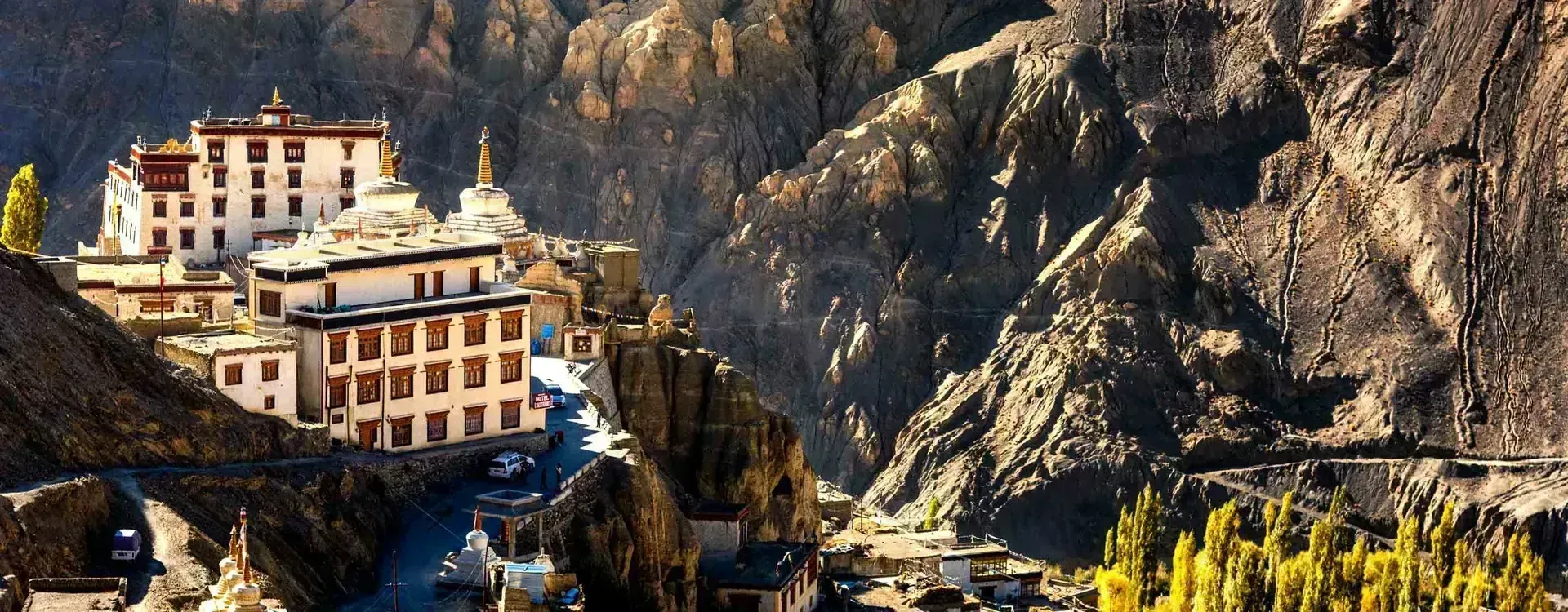
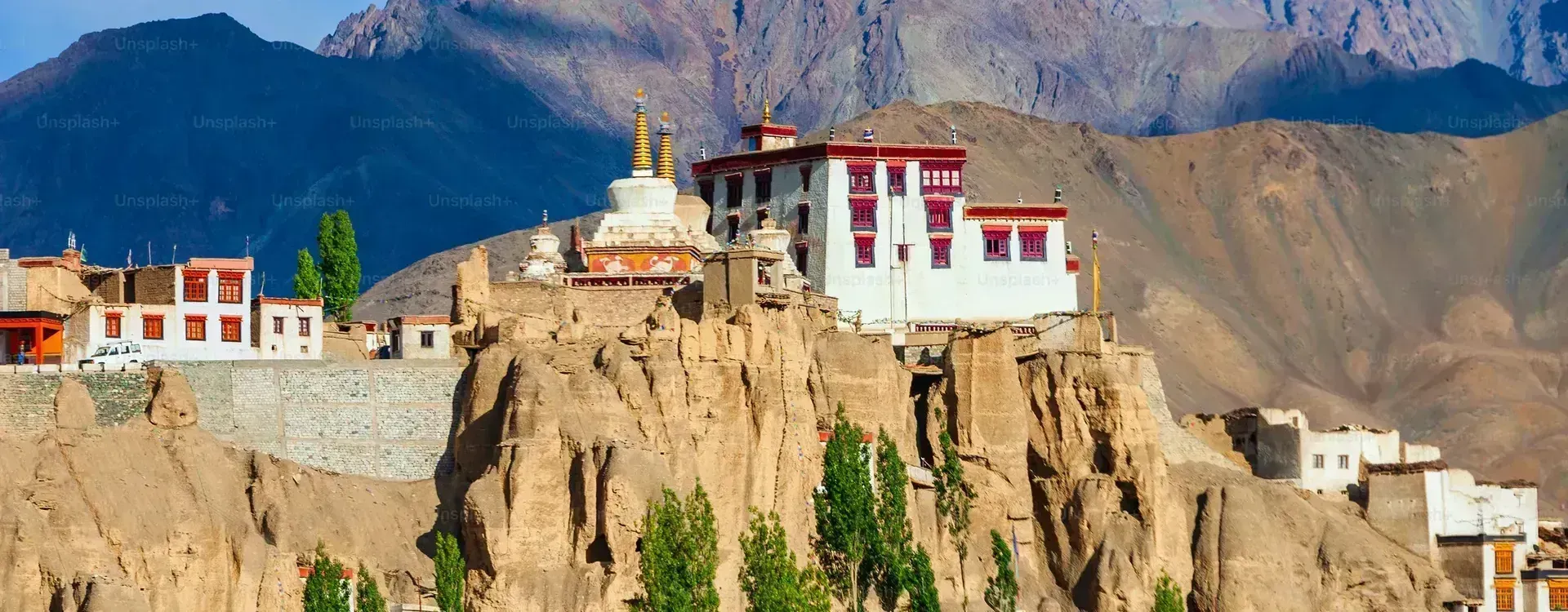
Somewhere between Leh and Kargil, the landscape suddenly stops looking like earth. Pale, eroded hills ripple across the valley in a way that genuinely resembles lunar terrain, which is exactly why this stretch has earned the nickname "Moonland." Rising right in the middle of it all is Lamayuru Monastery, one of the oldest and largest gompas in Ladakh — a thousand-year-old spiritual site perched dramatically above a landscape that looks like it belongs on a different planet entirely.
Top Attractions in Lamayuru
Lamayuru Monastery (Yungdrung Tharpaling) — an 11th-century monastery, among the oldest in Ladakh, home to ancient thangkas, murals and a meditation cave associated with the scholar Naropa
Moonland — the surrounding eroded hillscape, formed over centuries by wind and water carving an ancient dried lakebed into pale ridges and craters that genuinely resemble the lunar surface
Naropa's Meditation Cave — a small, glass-enclosed cave within the monastery complex, tied to the legend of the scholar credited with founding the site
Seng-ge-sgang Temple — an ancient temple within the monastery premises, part of its older architectural core
Wanla Monastery — a smaller, nearby monastery worth combining with a Lamayuru visit for those with extra time
Monastery Timings and Entry Fee
Lamayuru Monastery is generally open daily from 8:00 AM to 5:00 PM, with an entry fee of roughly ₹50 per person, going toward the site's maintenance. Timings can shift a little by season, so it's worth confirming locally, especially if you're visiting outside peak summer months. The Moonland viewpoint itself, being an open natural landscape rather than a managed site, has no entry fee and is accessible at any hour — most travellers spend somewhere between 20 and 40 minutes taking it in, often as a stop along the Leh-Kargil drive rather than a dedicated half-day visit.
The Legend Behind Moonland
According to local legend, Lamayuru was once the site of a vast lake. The scholar-monk Mahasiddhacharya Naropa is said to have dried the lake to lay the foundations for both the village and the monastery, and the exposed, dried lakebed subsequently eroded over centuries into the pale, crater-like formations visible today. Geologically, the more grounded explanation is straightforward erosion of ancient lakebed sediment by wind and water — but the story adds a layer of mythology that locals still tell visitors with real affection, and it's worth asking about if you get the chance to chat with anyone at the monastery.
History and Significance
Lamayuru is considered one of the very oldest monasteries in Ladakh, with some traditions describing it as the first site in the region to follow Bonpo traditions alongside Buddhism before later becoming a stronghold of the Drikung Kagyu lineage of Tibetan Buddhism. Its association with Naropa, a revered Buddhist scholar, gives it particular significance for practitioners and scholars of Tibetan Buddhist history, and the monastery remains an active site of worship and community life, not simply a preserved historical curiosity.
Best Food to Try Near Lamayuru
Lamayuru village has a handful of small guesthouses and cafes serving simple Ladakhi staples — Thukpa, Momos and butter tea are easy to find, along with basic North Indian meals for travellers passing through on the Leh-Kargil route. Given the village's small size, don't expect much beyond straightforward, traveller-friendly food, though it's perfectly adequate for a meal stop or overnight halt.
Best Shopping Near Lamayuru
Lamayuru isn't set up for shopping, though small stalls near the monastery occasionally sell simple Buddhist souvenirs — prayer flags, beads and small handicrafts. Most visitors treat this as a photography and cultural stop rather than a shopping one.
Dress Code at Lamayuru Monastery
As with other active Ladakhi monasteries, modest clothing covering shoulders and legs is expected, and shoes should be removed before entering prayer halls. Given the site's altitude (around 3,510 metres) and the highway-side setting, layering matters — mornings and evenings can turn cold quickly even in the main summer travel season.
Major Festivals at Lamayuru
Yuru Kabgyat Festival (Jun/Jul, dates vary by Tibetan lunar calendar): Lamayuru's major annual festival, featuring traditional masked Cham dances performed by monks, drawing pilgrims and photographers from across the region. The festival is sometimes held twice a year according to the Tibetan calendar, so it's worth checking specific dates if timing a visit around it.
Language Spoken Around Lamayuru
Ladakhi is the primary language spoken by locals in and around the monastery and village.
Hindi is understood among guesthouse owners and those involved in tourism along the highway.
English has some presence among monks and locals used to hosting travellers, though it's more limited than in Leh itself.
Traveller tip: Early morning or golden-hour light makes a genuine difference at Moonland — the low sun throws sharp shadows across the ridges, making the lunar comparison feel even more striking than it does under flat midday light.
One Day Itinerary Suggestion
Lamayuru works well as a stop on a Sham Valley day trip from Leh, or as a halt while transiting between Leh and Kargil. A typical visit includes an hour or so at the monastery itself, followed by 20-40 minutes taking in the Moonland viewpoints, often combined with nearby stops like Magnetic Hill, Alchi Monastery, or Basgo Monastery depending on your route and available time.
Best Time to Visit Lamayuru
May to September is the ideal window, when the Srinagar-Leh highway is fully open and weather is stable enough for comfortable sightseeing, with daytime temperatures generally ranging from a pleasant 12-25°C. January and February are best avoided unless you're specifically after winter photography, since temperatures can plunge to around -15°C and heavy snow often closes the Zoji La pass, cutting off road access from the west entirely.
How to Reach Lamayuru
Lamayuru sits roughly 115-130 km from Leh along the Srinagar-Leh highway (NH1), with the drive taking around 3-4 hours depending on traffic and road conditions — a route that also passes several other well-known Ladakh stops including Magnetic Hill, Sangam Point and Basgo Monastery. The nearest airport is Leh's Kushok Bakula Rimpochee Airport, about 115 km away, while Srinagar's airport sits roughly 310 km to the west for those approaching from that direction. The nearest railhead is Jammu Tawi, around 570-600 km away, making road travel by far the most practical way to reach the monastery. through Ladakh's most surreal stretch of highway.
Frequently Asked Questions about Lamayuru Monastery
Helpful answers to common traveler questions when planning a trip to Lamayuru Monastery.
Still have questions about your trip?
Talk to our destination specialist for personalized itinerary guidance & custom quotes.