
Sarnath Tour Packages
Are you eager to visit the Buddhist Stupas and experience seeing the historic Ashoka Pillar in Sarnath?
Trust KoiKoi Travel to provide an incredible itinerary where you can discover the Buddhist Stupas and enjoy seeing the historic Ashoka Pillar. This package is uniquely planned for your complete peace of mind.
Scroll down to explore our hand-crafted tour list and book your perfect holiday! 👇
No tours found in Sarnath Tours yet
Insider Travel Guide & TipsEverything About Sarnath Tours
Essential travel guide, top attractions, weather, local tips & culture for Sarnath Tours.
Read Full Guide Hide Guide
Everything About Sarnath Tours
Essential travel guide, top attractions, weather, local tips & culture for Sarnath Tours.
Top Attractions
Weather & Best Time
Sarnath: Where the Buddha First Spoke After Enlightenment
Just 10 km from Varanasi's chaos and colour, Sarnath sits in a completely different register — quiet, green, deliberate. This is where the Buddha walked nearly 250 km after attaining enlightenment at Bodh Gaya, found the five companions who had once abandoned him, and delivered his first sermon in a deer park, setting out the Four Noble Truths and the Eightfold Path for the first time. It's one of Buddhism's four most sacred sites, alongside Lumbini, Bodh Gaya, and Kushinagar, and the short trip out from Varanasi genuinely feels like stepping into an entirely different pace of travel.
Things You Really Shouldn't Skip
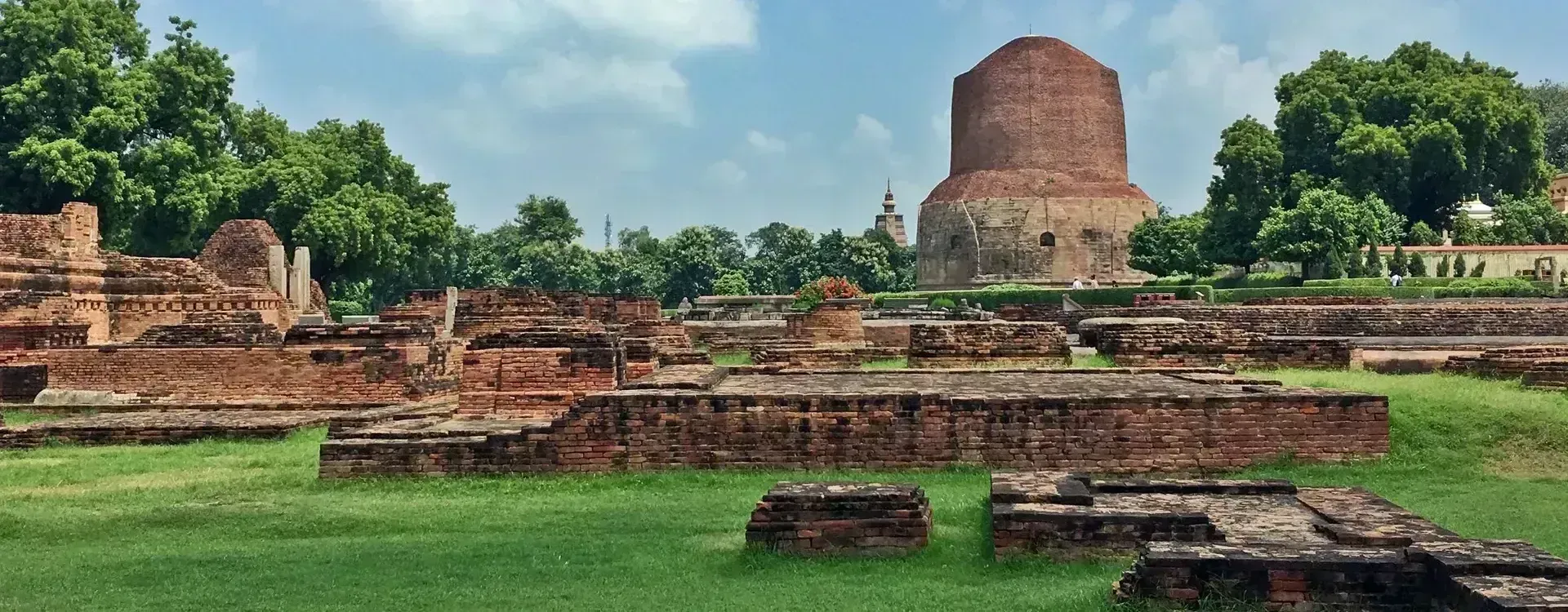
Dhamek Stupa — The centrepiece of Sarnath and one of the most recognisable Buddhist monuments in India, a massive cylindrical structure over 40 metres tall marking the exact spot where the first sermon is believed to have been delivered. Originally built by Emperor Ashoka in the 3rd century BCE, the present structure dates to around the Gupta period, and its surface still carries intricate carved floral patterns, geometric bands, and figures of humans and birds — genuinely worth walking a slow circle around rather than just glancing and moving on.
Ashoka Pillar and Lion Capital — The original pillar shaft, erected by Ashoka around 250 BCE, still stands near the Dhamek Stupa, though the famous Lion Capital that once crowned it — now India's national emblem — has been moved to the Archaeological Museum for preservation. Standing at the original site while knowing what it produced is a genuinely striking moment for anyone with an interest in Indian history.
Archaeological Museum — Home to the actual Lion Capital along with an excellent collection of Gupta-period Buddhist sculpture. This is the one part of Sarnath that runs on its own schedule (9 AM–5 PM, closed Fridays), so plan around it — missing the museum on a Friday means missing the single most important artefact on-site.
Mulagandha Kuti Vihar — The main modern Buddhist temple at Sarnath, built by the Mahabodhi Society, notable for its interior frescoes by Japanese artist Kosetsu Nosu depicting scenes from the Buddha's life. Evening prayers here, typically in the late afternoon, add a genuinely peaceful close to a Sarnath visit.
Deer Park (Mrigadava) and Chaukhandi Stupa — The Deer Park recreates the setting of the original sermon, while Chaukhandi Stupa, a short distance away, marks the spot believed to be where the Buddha first met his five former companions before the sermon itself.
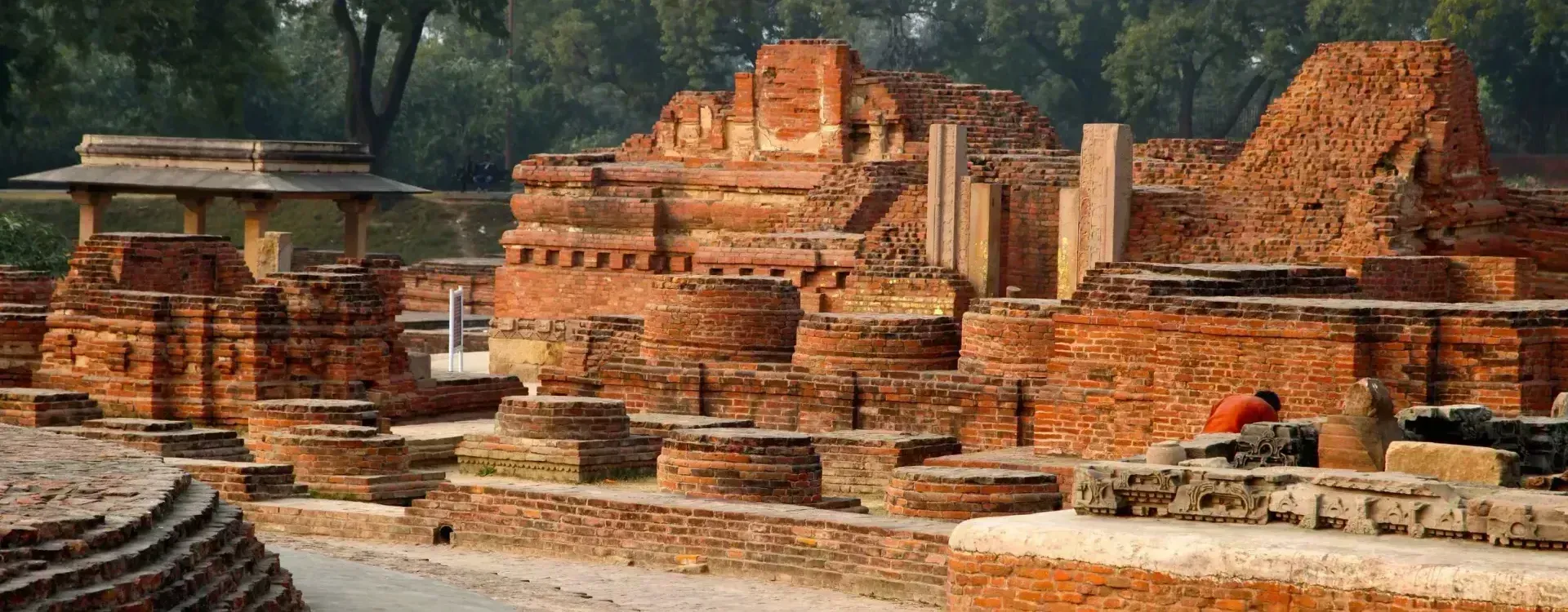
International Buddhist Temples — Sarnath has attracted temples built by Thai, Tibetan, Sri Lankan, Japanese, and other Buddhist communities from around the world, each with its own distinct architectural style — worth wandering through if you want to see how different Buddhist cultures have each interpreted the same sacred ground.
Timings and Entry Fees (worth double-checking before you go)
Site Timings Entry Fee Main archaeological site (Dhamek Stupa, Deer Park, Ashoka Pillar) Sunrise to sunset (roughly 6 AM–6 PM), daily ₹30–40 Indian / ₹500–600 foreign (approx.) Archaeological Museum 9:00 AM – 5:00 PM, closed Fridays ₹25 separately Mulagandha Kuti Vihar and international temples Daytime hours, evening prayers around 4–5 PM Free Chaukhandi Stupa Daytime hours Free / nominal
A heads-up: the Archaeological Museum's Friday closure is the single most important thing to plan around — arriving on a Friday means missing the Lion Capital and the museum's full sculpture collection entirely, so avoid that day if you can.
Getting Around
Sarnath's key sites — the Dhamek Stupa, Ashoka Pillar, museum, and Mulagandha Kuti Vihar — are all within a short walk of each other, roughly 1–2 km across the whole site, so once you're there, it's an easy, unhurried walk between everything. Getting to Sarnath from Varanasi is a straightforward 30-minute taxi or auto ride, roughly 10 km, and most visitors treat it as a half-day trip out from the city rather than an overnight stay.
What to Eat
Sarnath doesn't really have its own distinct food identity separate from Varanasi — most visitors eat in the city before or after the trip out. Around the site itself, you'll find simple vegetarian food and snacks catering to pilgrims and day-trippers, but it's not really a destination for a dedicated food experience the way Varanasi itself is.
Shopping
Small stalls near the site sell Buddhist prayer items, small statues, and devotional souvenirs, but Sarnath isn't a major shopping destination — most visitors treat it purely as a pilgrimage and historical stop rather than combining it with a shopping trip.
What to Wear
Comfortable walking shoes matter here, since a full, unhurried visit covering the stupa, museum, temples, and Deer Park genuinely involves a fair amount of walking across the site. Modest clothing is appropriate at the temples, as with any active Buddhist place of worship.
The Feel of the Place
The contrast with Varanasi is really the whole point of Sarnath — the road out passes through quiet residential lanes, and the noise of the city genuinely falls away by the time you reach the deer park. There's a stillness here that feels deliberate rather than accidental, appropriate for a spot marking the moment someone sat down and, for the first time, tried to put into words what they'd understood about suffering and its end. Even without any particular religious background, it's hard not to feel that weight standing at the base of the Dhamek Stupa.
Festivals Worth Timing Your Trip Around
Buddha Purnima (May): Marking the Buddha's birth, enlightenment, and death all on the same day according to tradition, this is Sarnath's most significant annual event, drawing large numbers of pilgrims — arrive early, around 6:00–6:30 AM, for a calmer experience before the crowds build.
A Tip From Experience
Plan your Sarnath day for any day except Friday — this can't be overstated, since missing the Archaeological Museum means missing the actual Lion Capital, the single most historically significant object connected to the site. And give yourself the full 3.5 to 4 hours a proper visit deserves rather than squeezing it into a rushed hour between other Varanasi plans; the whole point of Sarnath is the unhurried pace.
A Simple Half-Day Plan
Start with the Dhamek Stupa and Ashoka Pillar in the morning, when the site is quietest, then move to the Archaeological Museum once it opens at 9 AM. Walk through Deer Park and Chaukhandi Stupa around midday, and close with Mulagandha Kuti Vihar in the late afternoon to catch the evening prayers before heading back to Varanasi.
Best Time to Go
October to March, cool and comfortable for the amount of walking a full Sarnath visit involves. This is also peak season though, so expect larger crowds at the main sites — the shoulder months of April–May and September offer a decent balance of manageable weather and thinner crowds if you'd rather avoid the busiest period.
How to Get There
Sarnath doesn't have its own airport or major railway station — it's reached almost entirely via Varanasi, about 10 km away, a straightforward 30-minute taxi or auto ride from the city, or from Varanasi's Lal Bahadur Shastri International Airport. Most visitors treat Sarnath as a half-day add-on to a Varanasi trip rather than a standalone destination, and it pairs naturally with a wider Buddhist circuit through Kushinagar and Bodh Gaya if you have more time.
Frequently Asked Questions about Sarnath
Helpful answers to common traveler questions when planning a trip to Sarnath.
Still have questions about your trip?
Talk to our destination specialist for personalized itinerary guidance & custom quotes.