
The Camel Country in India
Bikaner
Bikaner Tours
Are you looking to visit Junagarh Fort and experience an exciting Camel Safari in the desert in Bikaner?
Let KoKoi Travel guide you with a perfect itinerary where you can easily explore Junagarh Fort and enjoy an exciting Camel Safari in the desert. We have designed this trip uniquely for you.
Scroll down and click on our premium tour packages to book your next adventure! 👇
16 Days - Rajasthan Itinerary with Agra and Delhi
Everything About Bikaner
Top Attractions
Weather & Best Time
Bikaner: The Fort That Never Fell, in a City That Loves Its Snacks
Bikaner doesn't get talked about with the same reverence as Jaisalmer or Udaipur, and honestly, that's part of its appeal — it feels less performed, more lived-in, and the desert here comes with a fort that's genuinely one of a kind: Junagarh, built on flat ground rather than a hilltop, and never once conquered in over 400 years despite repeated attempts. Add in a temple full of sacred rats, some of the best namkeen in India, and camel safaris that feel less crowded than elsewhere in Rajasthan, and Bikaner ends up being one of those places that quietly outperforms its reputation.
Things You Really Shouldn't Skip
Junagarh Fort — Built by Raja Rai Singh in the late 16th century, this is Bikaner's crown jewel and one of the best-preserved fort complexes in Rajasthan, with 37 palaces, temples, and pavilions inside a single walled quadrangle. The Anup Mahal — with its red-and-gold walls, glass inlay, and gold-leaf work — was the seat of governance and is the standout interior. Give it real time; this isn't a quick walk-through kind of fort.
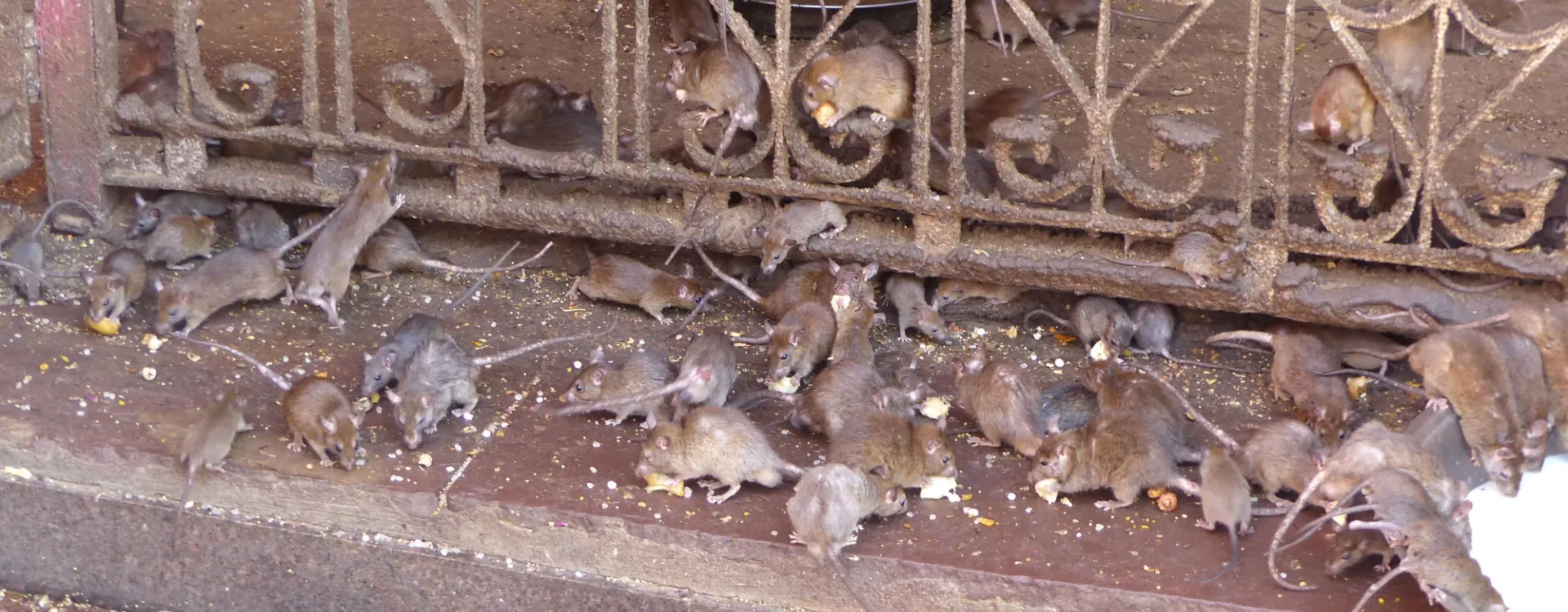
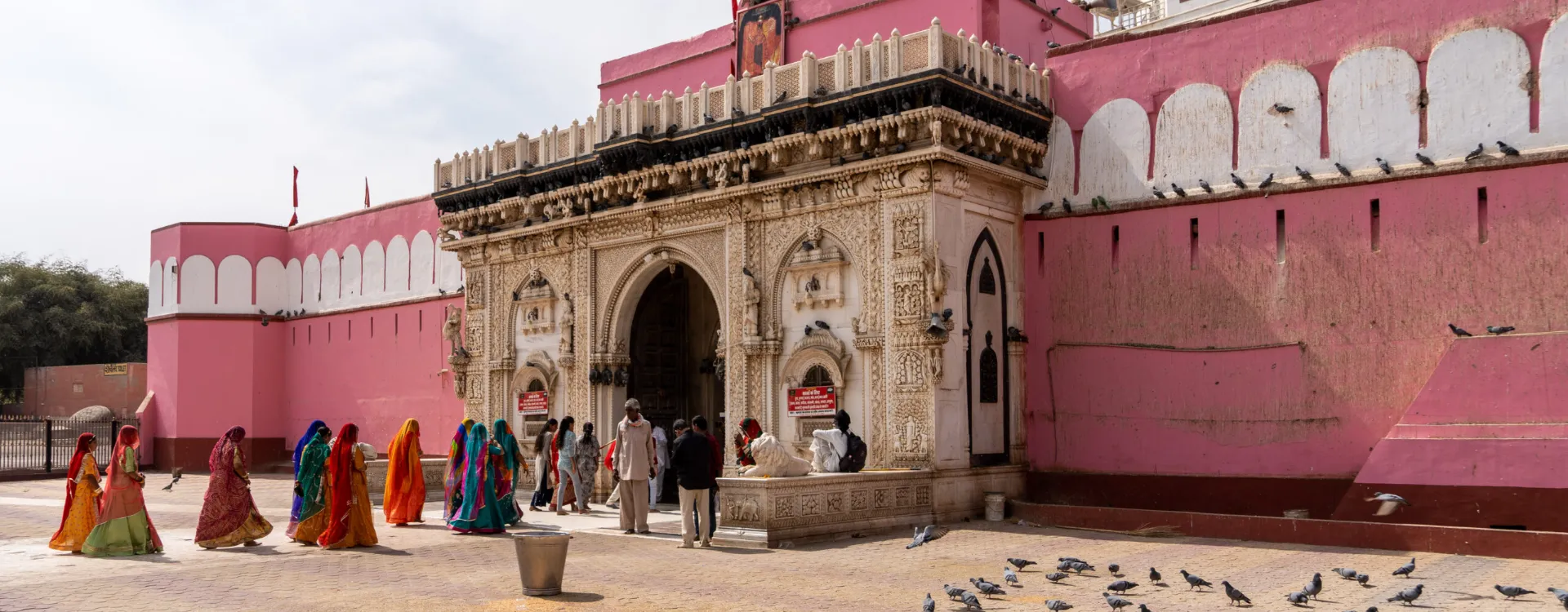
Karni Mata Temple, Deshnoke — About 30 km outside the city, this 600-year-old temple is famous, or infamous depending on your comfort level, for the roughly 25,000 black rats that live and are worshipped inside it. It's a genuinely unusual pilgrimage site, and the food they've nibbled on is considered holy and offered back as prasad — not for everyone, but unforgettable if you go in with an open mind.
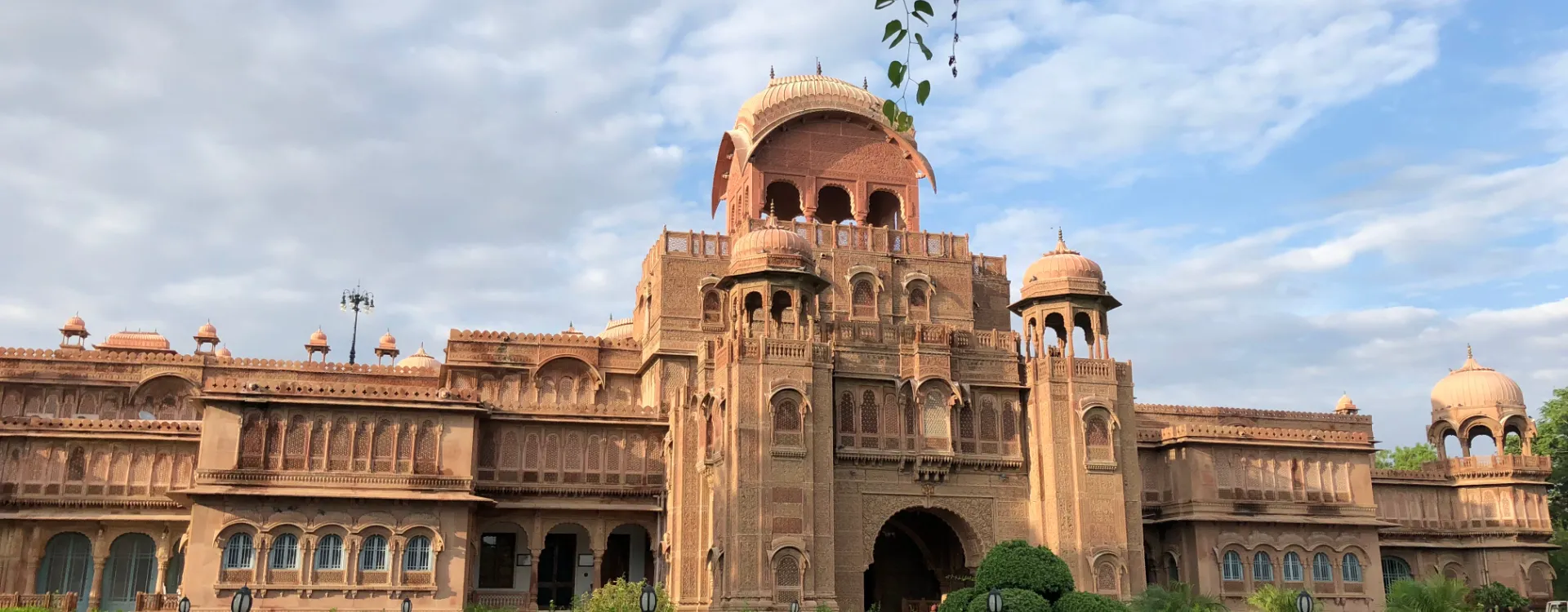
Lalgarh Palace — Built in the early 20th century in red sandstone, part of this palace is now a heritage hotel while other sections remain open to visitors. The grounds are a good spot to catch the sunset.
National Research Centre on Camel — A working camel breeding and research farm on the edge of the city, where you can see camels up close and try camel milk products, including camel milk ice cream, which is a surprisingly approachable way to try it if you're skeptical.
Gajner Wildlife Sanctuary — About 32 km from the city, a former royal hunting ground turned protected reserve, with blackbucks, chinkaras, nilgais, and migratory birds around a scenic lake — a good half-day away from the fort circuit.
Timings and Entry Fees (worth double-checking before you go)
Site Timings Entry Fee Junagarh Fort 10:00 AM – 4:30 PM, all days ₹50 Indian / ₹300 foreign; museum section ₹20–50 extra; camera fees apply Karni Mata Temple Open through the day Free Lalgarh Palace grounds Open through the day Modest entry for certain sections National Research Centre on Camel Roughly 3–5 PM visiting window Small entry fee Gajner Wildlife Sanctuary Open through the day Entry fee applies, jeep safaris extra
A heads-up: Junagarh's entry fees are split across the main complex and the museum section, so it's worth checking at the ticket counter which combination gets you into everything you want to see.
Getting Around
Junagarh Fort sits right in the heart of the city, just a couple of kilometres from Bikaner Junction, and is easy to reach by auto or cab. Karni Mata Temple, the Camel Research Centre, and Gajner Sanctuary are all outside the city proper, so they're best done as half-day trips with a hired car — trying to string more than one or two of these together on public transport will eat up most of your day in transit alone. Inside the city, the old markets around Kote Gate and Station Road are easily walkable once you're there.
What to Eat
Bikaner takes its snacks seriously — locals joke that half the city is busy making bhujia and the other half is busy eating it, and once you've tried fresh Bikaneri Bhujia here, packaged versions elsewhere will feel like a poor imitation. Kachoris are eaten at every meal with equal enthusiasm, and the city's rasgullas are made with local milk that genuinely sets them apart from the more familiar Bengali version. If you want something specifically Bikaneri, look for Mawa Kachori — a fried pastry stuffed with rich khoya and nuts. Dal Baati Churma shows up here too, done particularly well in the city's traditional restaurants, and camel milk products at the research centre are worth trying at least once for the novelty alone.
Shopping
Kote Gate Market is where most of the shopping happens — camel leather goods, miniature paintings, handicrafts, and of course, fresh bhujia straight from established local brands. Station Road Market leans more toward traditional fabrics and bandhani sarees. Bikaner is also known for Mojaris (its own style of traditional footwear), Kundan jewellery work, lacquer bangles, and wooden antiques — between the two markets, you'll come away with a genuinely good haul.
What to Wear
Modest clothing, especially at Karni Mata Temple and inside the fort's temple sections. Bikaner sits deep in the Thar Desert, so days can run hot even in the cooler months, while winter nights and early mornings turn properly cold — layering matters more here than it might seem from the daytime heat.
The Feel of the Place
There's a certain pride in Bikaner that comes from being the fort nobody could take — Junagarh's story isn't one of survival through sacrifice, like some of Rajasthan's other forts, but of quiet, consistent defence, and that comes through in how the city carries itself. It's less polished for tourists than Jaipur or Udaipur, which means the markets, the snack shops, and the everyday street life feel more genuinely local. Karni Mata Temple adds its own strange, memorable layer to the city's identity — Bikaner isn't shy about being a little unusual, and that's part of its charm.
Festivals Worth Timing Your Trip Around
Bikaner Camel Festival (January): The city's biggest tourist draw, with camel races, folk performances, and a genuinely festive desert atmosphere centred around Junagarh Fort.
Karni Mata Fair: Celebrated at the Deshnoke temple in honour of Karni Mata, drawing large numbers of devotees.
Kolayat Fair (Kapil Muni Fair, November): Held during Kartik Poornima, combining religious significance with a large, lively local fair.
A Tip From Experience
Start early at Junagarh — it's a dense fort, and rushing through it genuinely reduces how much you take in, so give it a real morning rather than squeezing it in before lunch. And when you're at Kote Gate for bhujia, buy from an established local shop rather than the closest tourist-facing stall — the difference in quality is noticeable, and it's worth the extra few minutes of walking to find the real thing.
A Simple Two-Day Plan
Day one: Spend the morning at Junagarh Fort, unhurried, then wander Kote Gate Bazaar in the afternoon for bhujia, shawls, and silver. Catch sunset at Lalgarh Palace grounds. Day two: Drive out to Karni Mata Temple in Deshnoke in the morning, followed by the National Research Centre on Camel in the afternoon, and end the day with a camel safari and sunset at the Raisar sand dunes if you have the energy for it.
Best Time to Go
October to March, with January being peak season thanks to the Camel Festival. Daytime temperatures in this window sit around a comfortable 15–23°C, ideal for fort visits, desert camping, and camel safaris alike. April to June turns brutally hot, often crossing 40°C, and is best avoided for anything beyond air-conditioned sightseeing.
How to Get There
Bikaner Junction, just a couple of kilometres from Junagarh Fort, connects well to Delhi, Jaipur, and Jodhpur by train, including services like the Bikaner Express. The nearest well-connected airport is in Jodhpur, roughly 235–250 km away, though Bikaner does have a smaller local airport (Nal Airport) with limited flights. By road, Bikaner is well linked to Delhi (about 458 km), Jaipur (354 km), Jodhpur (235 km), and Jaisalmer (333 km), with regular government and private buses running all these routes.
Frequently Asked Questions
Simple answers about booking, payments, trip plans and help during your holiday.
Still have questions about your trip?
Talk to our destination specialist for personalized itinerary guidance & custom quotes.