
Badrinath Tour Packages
Looking to explore the hidden gems and famous attractions of Badrinath with your loved ones?
Stop searching! KoiKoi Travel brings you hand-crafted itineraries that include every beautiful attraction Badrinath has to offer.
We provide nice cars, great hotels, and very friendly guides to make your trip super fun and perfectly designed for you.
Scroll down to see the best Badrinath travel packages designed just for you! 👇
No tours found in Badrinath yet
Insider Travel Guide & TipsEverything About Badrinath
Essential travel guide, top attractions, weather, local tips & culture for Badrinath.
Read Full Guide Hide Guide
Everything About Badrinath
Essential travel guide, top attractions, weather, local tips & culture for Badrinath.
Top Attractions
Weather & Best Time
Badrinath: The Sacred Doorway That Opens for Only Six Months a Year
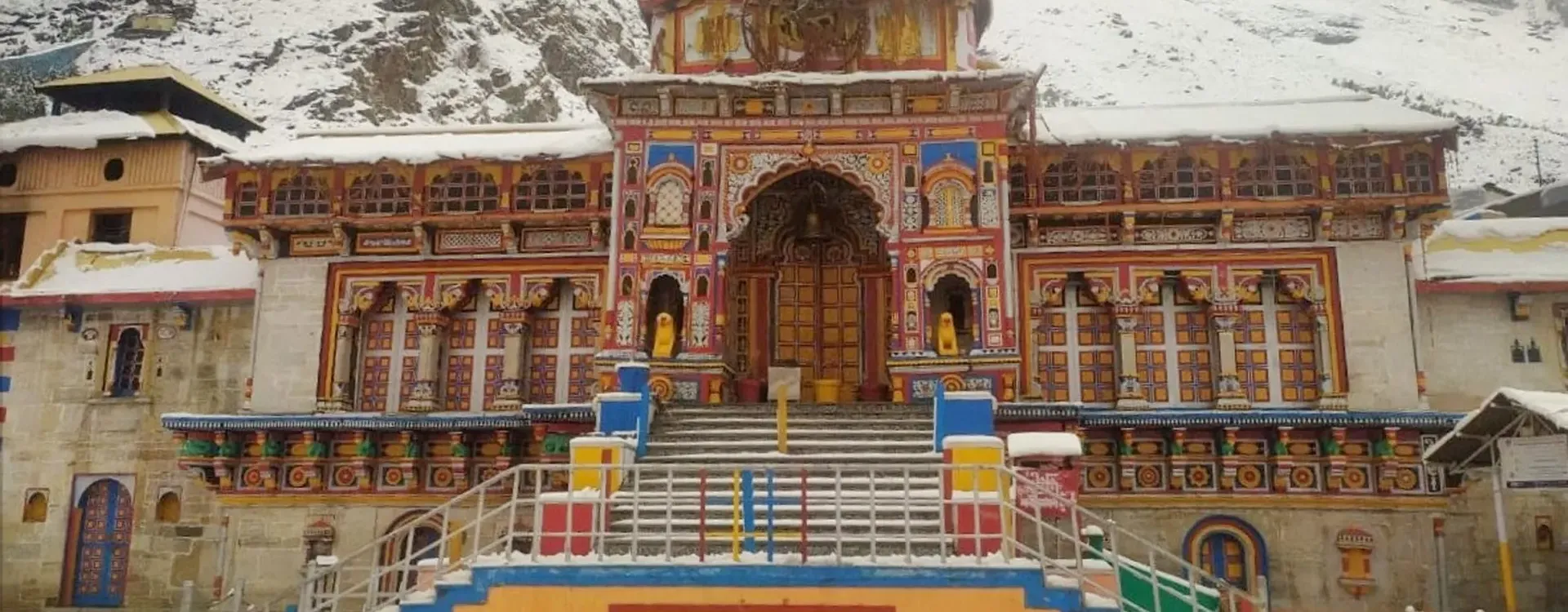
Badrinath doesn't run on any ordinary calendar. Every year, this shrine dedicated to Lord Vishnu is sealed under heavy Himalayan snow for roughly six months, with the deity's festival idol relocated down to Joshimath during the closure. When the doors — the Kapat — finally reopen each spring, it's treated as a genuine event, with Vedic hymns, the Chief Priest's ceremonial arrival, and pilgrims who've often planned their entire year around being present for that first darshan. It's one of Hinduism's Char Dham sites and, unusually, also part of the smaller Chota Char Dham circuit — a shrine that matters twice over in the pilgrimage calendar.
Top Attractions in Badrinath
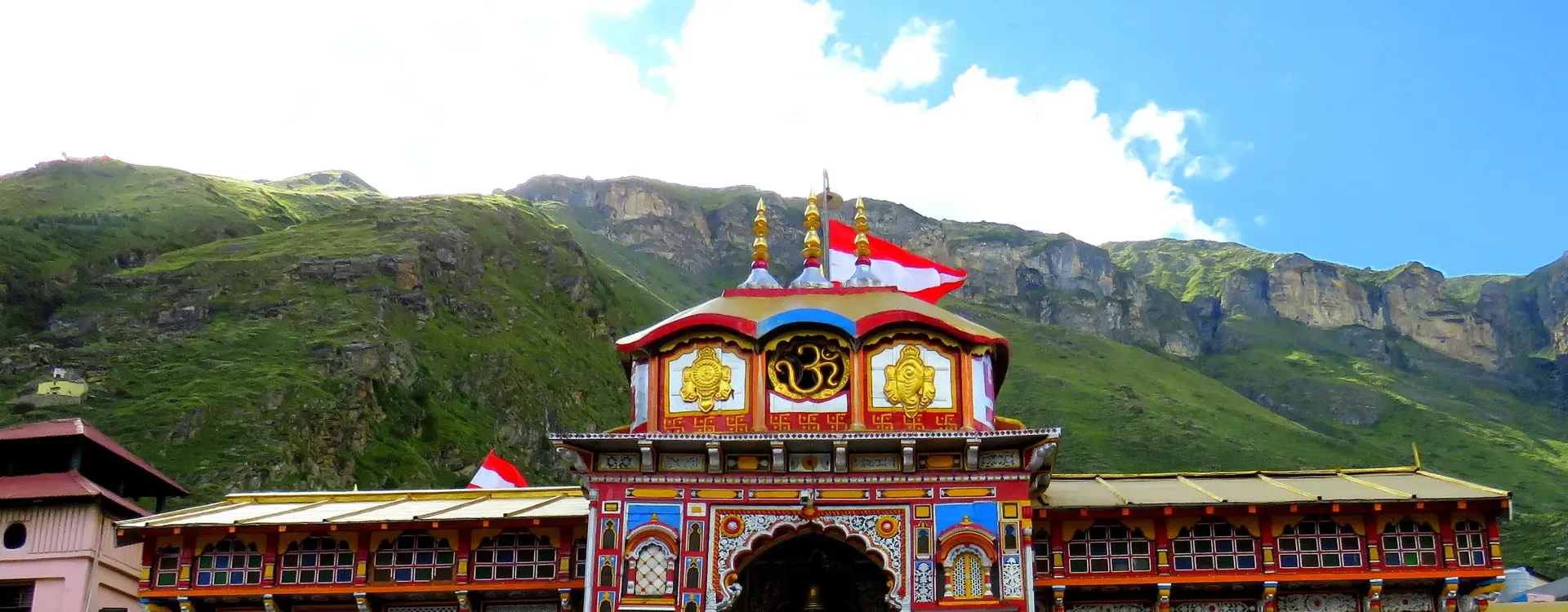
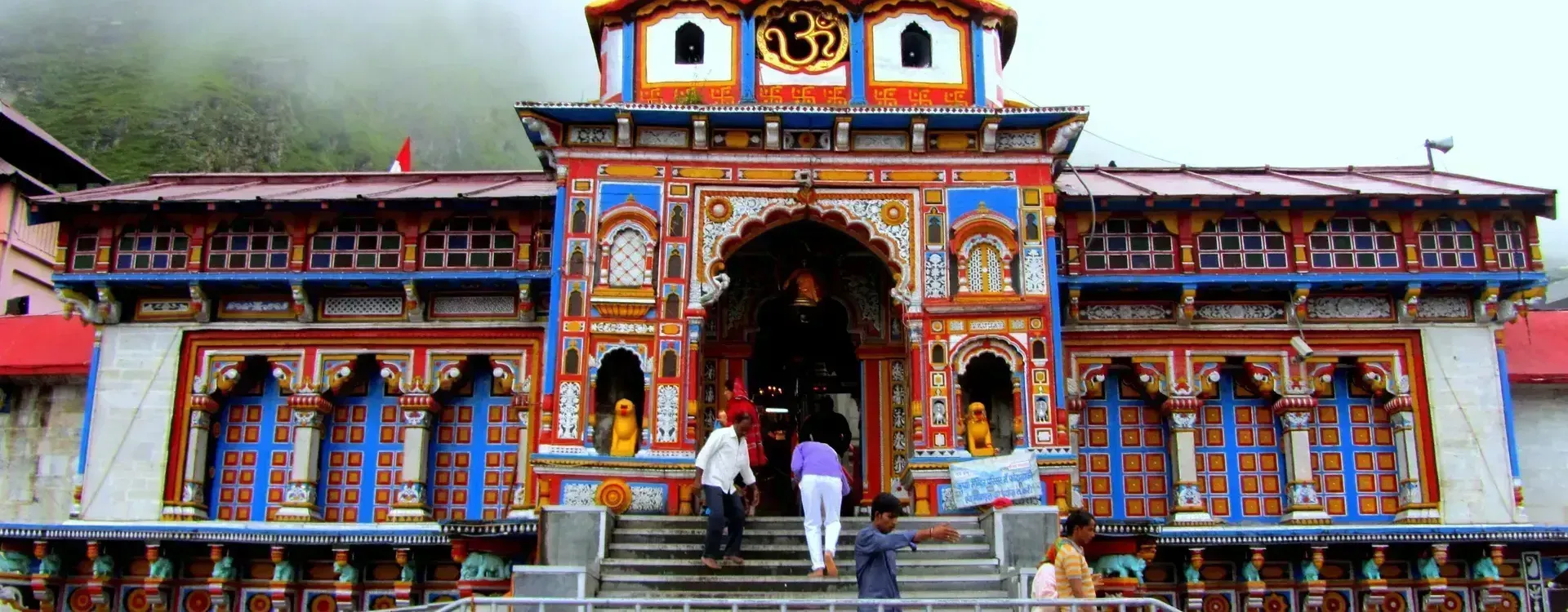
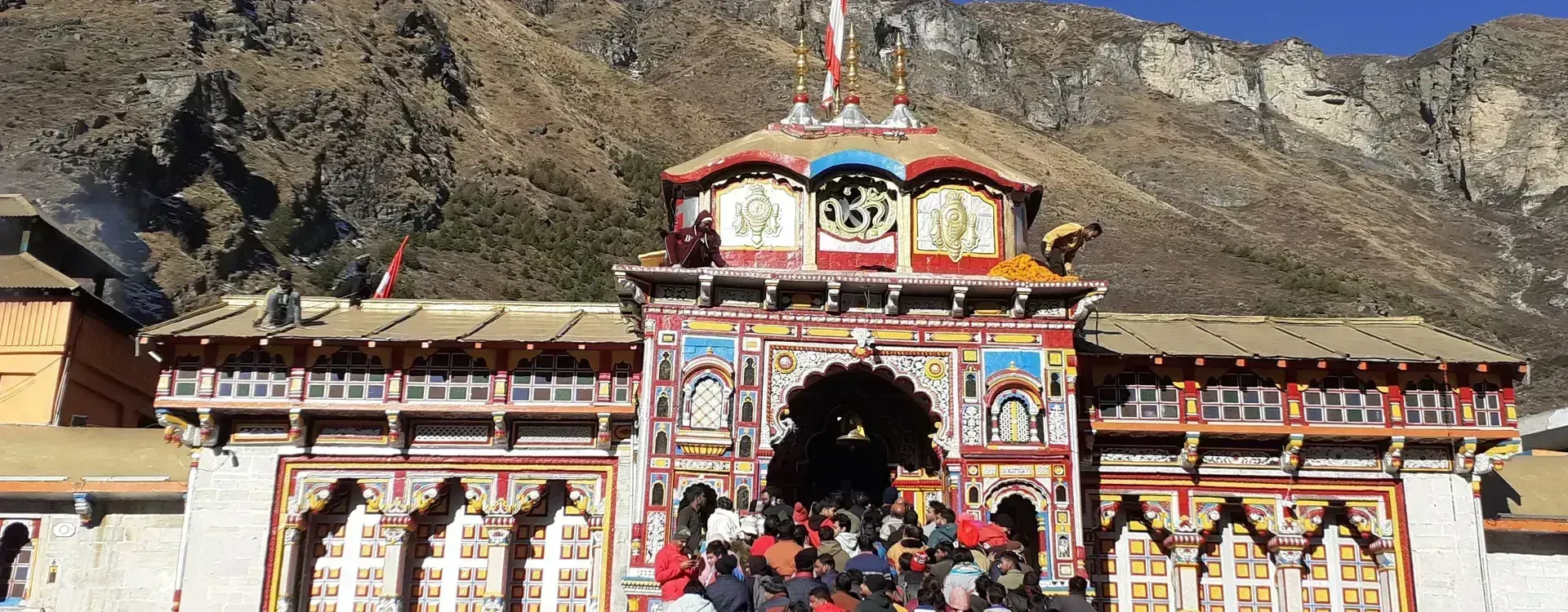
Badrinath Temple — the main shrine dedicated to Lord Vishnu in his Badrinarayan form, its brightly painted facade a striking contrast against the surrounding grey peaks
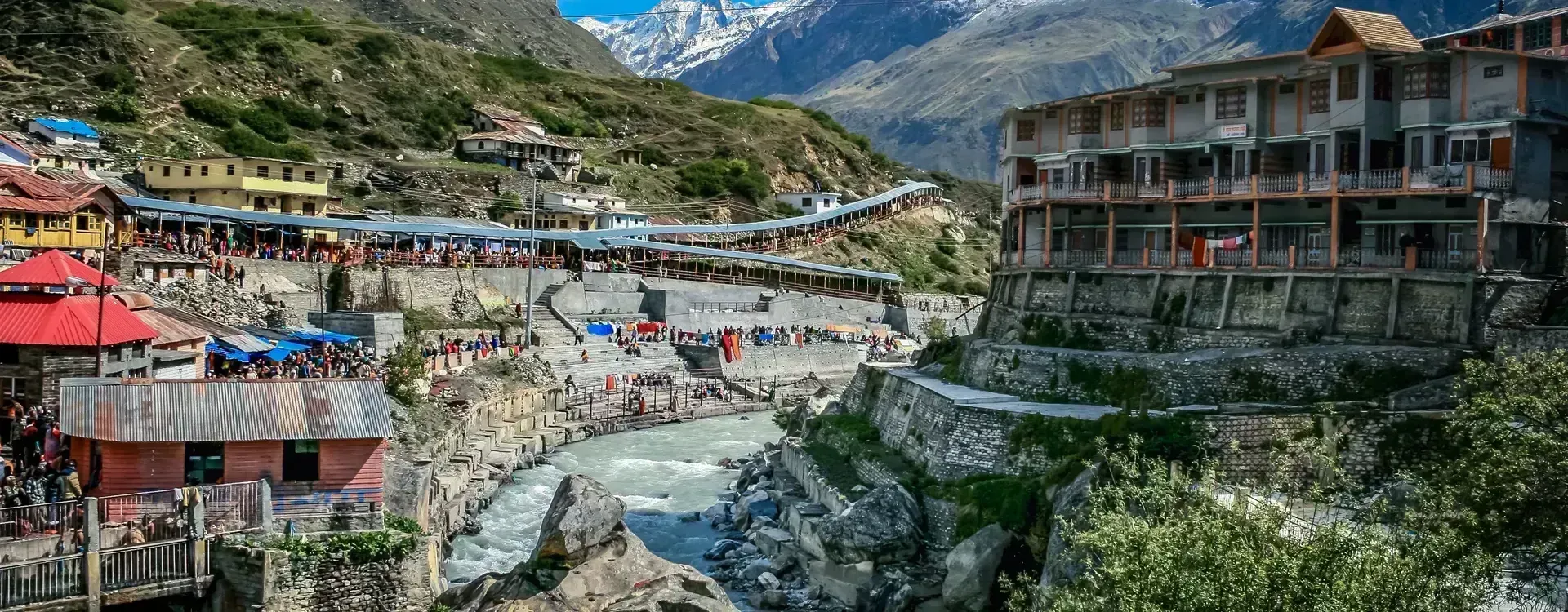
Tapt Kund — natural hot springs just below the temple, traditionally where pilgrims bathe before entering for darshan, striking given the near-freezing air around it
Mana Village — often called India's "last village" before the Tibet border, just 3 km from the temple, home to the Saraswati River's mythical origin point and the natural rock bridge known as Bheem Pul
Brahma Kapal — a riverside spot near the temple where Hindus perform Pind Daan, rituals for departed ancestors
Neelkanth Peak — visible from the temple complex, often called the "Garhwal Queen," and one of the most striking mountain backdrops of any Char Dham shrine
Vasudhara Falls — a scenic waterfall a few kilometres beyond Mana Village, reached via a moderate trek
Temple Timings and Darshan Details
For the 2026 season, Badrinath Temple's Kapat opened on April 23 at 6:15 AM and is expected to remain open until roughly mid-to-late November, depending on weather conditions, with the closing date formally announced around Vijayadashami (Dussehra). Daily darshan runs in two sessions — morning from 4:30 AM to 1:00 PM and evening from 4:00 PM to 9:00 PM — with a midday break from 1:00 PM to 4:00 PM for rituals. The day begins with the Maha Abhishek Aarti at 4:30 AM (a closed-door ritual for those with VIP puja bookings), followed by general darshan opening to all pilgrims around 7:00-8:00 AM. The day closes with the Shayan Aarti around 8:30 PM.
General darshan is completely free, though registration through the official Uttarakhand tourist care portal is mandatory for every pilgrim, generating a Yatra QR code you'll need at checkpoints along the route. Queue times during peak season (May-June) can stretch anywhere from 2 to 5 hours, so arriving early — ideally by 4:00 AM — makes a genuine difference.
VIP/Special Puja Darshan: For those wanting priority access and closer proximity to the inner sanctum, special pujas range from roughly ₹1,100 to ₹5,100 depending on the ritual, with the Mahabhishek Puja (the most popular VIP option) priced around ₹4,700 and conducted early, between 4:30 and 6:30 AM, before general darshan even begins. All these bookings are done online through the official badri-kedar.gov.in portal and are non-refundable and non-transferable, so it's worth confirming your travel dates before booking.
Note: Kapat opening and closing dates, along with exact darshan timings, are announced fresh each year on Basant Panchami, so always confirm current-year dates before planning your trip.
History and Significance
Badrinath's spiritual roots run deep — the temple is believed to have been established or revived by the 8th-century philosopher Adi Shankaracharya, and its Vishnu-centred worship makes it one of the four principal Char Dham sites spread across India's cardinal directions. The temple's remote, high-altitude setting, sealed by snow for half the year, has long added to its mystique — pilgrims are told that an eternal oil lamp, the Akhand Jyoti, continues burning in the sanctum throughout the winter closure, a detail that adds real weight to the temple's reopening each spring.
Best Food to Try in Badrinath
Being a high-altitude pilgrimage town, Badrinath's food is simple and largely sattvic (pure vegetarian, without onion or garlic), reflecting the spiritual character of the place. Most hotels and dhabas serve straightforward North Indian thalis, along with hot khichdi and simple dal-rice combinations well suited to the cold. Prasad from the temple, along with local treats found around Mana Village, round out the food experience here — this isn't a destination for culinary variety, but for the warmth of a simple hot meal after a cold darshan queue.
Best Shopping in Badrinath
Small shops near the temple and in Mana Village sell religious items — rudraksha malas, pictures of Badrinarayan, and woollen items given how cold the region gets. Mana Village itself is known for handwoven woollen shawls and carpets, worth a browse if you make the short trip beyond the temple.
Dress Code in Badrinath
Modest clothing is expected at the temple, as with all major pilgrimage sites, and given Badrinath's altitude, warm layering is essential regardless of season — mornings can hover around 5°C even in peak summer months. Comfortable, warm footwear matters too, both for the queue itself and for any walk out to Mana Village or Tapt Kund.
Culture of Badrinath
Badrinath's identity is inseparable from its extreme seasonality — a temple that exists in full ceremonial life for barely six months a year, then disappears under snow, deity and all, for the rest. That rhythm shapes everything about how the town functions, from the frenzy of activity around Kapat opening to the quiet, snowbound stillness of winter when the Utsav Murti sits instead in Joshimath's Narsimha Temple. Mana Village nearby carries its own distinct Indo-Tibetan character, its position as the last inhabited settlement before the border giving it a genuinely different feel from the temple town itself.
Major Festivals and Events in Badrinath
Kapat Udghatan (late April, exact date announced on Basant Panchami): The grand ceremonial opening of the temple doors, marking the start of the pilgrimage season, involving the Tel Kalash Yatra and Vedic rituals.
Mata Murti Ka Mela (Sep): A local fair honouring Mata Murti, believed to be the mother of Lord Badrinarayan in local tradition.
Kapat Band (around Vijayadashami/Dussehra, formally announced later in the year): The closing ceremony marking the end of the pilgrimage season, ahead of the region's total snowbound closure.
Language Spoken in Badrinath
Hindi is the primary language spoken by pilgrims, priests and locals alike.
Garhwali is spoken by many locals from the surrounding region.
English has limited but growing presence among hotel staff and tour operators given the steady flow of both domestic and occasional international visitors.
Traveller tip: Digital payments are unreliable this high in the mountains — carry enough cash for prasad, small offerings and local transport, since your UPI app may not cooperate exactly when you need it to.
One Day Itinerary Suggestion
Early morning darshan at Badrinath Temple (arriving before sunrise to beat the queue), a dip at Tapt Kund before entering, followed by a short drive or walk to Mana Village for the Saraswati River origin point and Bheem Pul, and an afternoon visit to Brahma Kapal before heading back to your stay for the evening.
Best Time to Visit Badrinath
Mid-May to mid-June and mid-September to late October are the two best windows — pleasant weather, manageable crowds compared to the immediate post-opening rush, and clear mountain views. The period right after Kapat opening in late April can be exciting but comes with cold weather and the year's biggest crowds, so it's worth weighing that trade-off if timing your visit around it specifically.
How to Reach Badrinath
Badrinath sits roughly 320 km from Haridwar, a drive of about 10-12 hours via Rishikesh and Joshimath, making it a genuinely long overland journey best broken up with an overnight stop. Helicopter services are also available from a few points including Gauchar, offering a faster if considerably pricier alternative for those short on time. There's no railway station or airport in Badrinath itself — Dehradun's Jolly Grant Airport and Haridwar's railway station remain the nearest major transport links, with the entire onward journey completed by road.
With KoiKoi Travel, experience the devotion, history and Himalayan grandeur of Badrinath on a pilgrimage that opens its doors to the world for just half the year.
Frequently Asked Questions about Badrinath
Helpful answers to common traveler questions when planning a trip to Badrinath.
Still have questions about your trip?
Talk to our destination specialist for personalized itinerary guidance & custom quotes.